The water flowing from your tap, the air outside your window, and the soil beneath your feet all contain chemicals. Some occur naturally, while others enter the environment through farming, transport, industry, household waste, and energy production.
But what is environmental chemistry? It is the branch of chemistry that studies chemical substances and processes in air, water, soil, sediments, and living organisms.
Environmental chemists examine where chemicals come from, how they move, what they turn into, and how they affect ecosystems and human health. The field is not limited to identifying pollution.
It also investigates natural processes such as nutrient cycles, atmospheric reactions, mineral dissolution, and changes in water acidity.
Environmental chemistry helps us answer practical questions. Is drinking water safe? Where does an industrial contaminant travel after entering the soil? Why does air pollution affect a lake far from its original source?
To answer them, scientists combine chemistry with biology, geology, atmospheric science, toxicology, and environmental engineering.
What Does Environmental Chemistry Study?
Environmental chemistry studies the chemical composition of the natural world and the reactions taking place within it. Its main environments include the atmosphere, rivers, lakes, oceans, groundwater, soil, sediments, and living organisms.
Scientists investigate both natural and human-made substances. Natural chemicals include minerals, salts, nutrients, gases, and organic matter released by plants and microorganisms.
Human activities can introduce pesticides, industrial compounds, pharmaceuticals, metals, fuel residues, and plastic-related chemicals.
A substance is not automatically harmful simply because it is called a chemical. Its effects depend on its identity, concentration, chemical form, route of exposure, location, and how long it remains in the environment.
Environmental chemists therefore look beyond whether a substance is present. They ask how much is there, whether it can move, how it reacts, and whether people or wildlife are likely to encounter it.
Chemistry in Air, Water, and Soil
Environmental systems are closely connected. A pollutant released into the air may later enter soil or water, while a chemical spilled on land may move into groundwater or evaporate into the atmosphere.
1. Atmospheric Chemistry
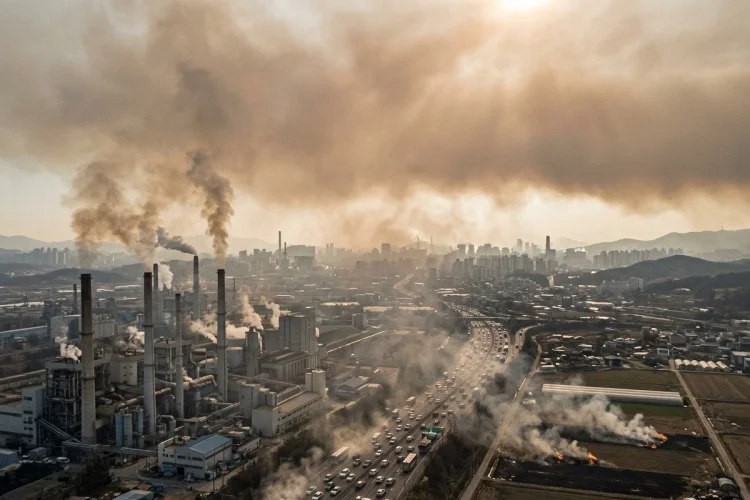
Atmospheric chemistry examines gases, particles, sunlight-driven reactions, and pollutants in the air. Particulate matter, for example, is a mixture of solid particles and liquid droplets; some are visible as smoke or dust, while others are microscopic.
Clouds and fog can also act as chemical environments. Gases may dissolve in water droplets and react before returning to Earth through precipitation.
2. Water Chemistry
Water chemistry involves pH, dissolved oxygen, nutrients, minerals, salts, metals, and organic contaminants. Water that looks clear may still contain dissolved substances that cannot be detected by sight or smell.
The meaning of “good water quality” depends partly on its intended use. Water suitable for irrigation may not meet drinking-water standards, while aquatic organisms may require particular oxygen, temperature, and pH conditions.
3. Soil and Sediment Chemistry
Soil contains minerals, water, air, organic matter, and living organisms. Its acidity, texture, and chemical composition affect whether a contaminant remains trapped, breaks down, enters plants, or moves toward groundwater.
Contaminated soil can release chemicals into nearby surface water or groundwater. Certain substances may also be absorbed by plants and animals or enter indoor air through vapor movement.
How Chemicals Move Through the Environment
A chemical rarely stays exactly where it was released. Rainfall can wash substances from roads and fields into rivers, wind can transport airborne particles, and groundwater can carry dissolved contaminants underground.
Nonpoint-source pollution is a useful example. Instead of coming from one obvious pipe, it may result from runoff, precipitation, drainage, or seepage across a wide area. As water moves over land, it can collect fertilizers, sediment, oil, pesticides, and other materials.
Environmental chemists study processes such as dissolution, evaporation, adsorption, and chemical degradation. Adsorption occurs when molecules attach to the surface of soil or sediment particles, potentially slowing their movement.
The properties of the chemical matter too. Some substances dissolve easily in water, while others interact more strongly with oils, organic matter, or sediment. Volatile compounds may evaporate, and sunlight can break down certain molecules through photochemical reactions.
Understanding this movement helps scientists locate contamination, estimate exposure, and decide which cleanup strategy is most appropriate.
What Happens to Pollutants After Release?
Pollutants do not always remain chemically unchanged. They may react with oxygen, water, sunlight, minerals, or microorganisms and form transformation products.
Sometimes degradation makes a contaminant less harmful. In other cases, a new product may be equally harmful or even more toxic than the original substance.
Persistence is another major concern. Persistent organic pollutants can resist environmental degradation, travel long distances through air and water, and accumulate in living organisms. Their concentrations may increase through parts of a food chain.
This is why environmental chemistry studies the complete life of a substance rather than only its original release. Scientists want to know where it goes, what it becomes, how long it remains, and which organisms may be exposed.
Chemical form is also important. The same element can behave differently depending on the compound or ion in which it appears. Environmental conditions such as pH and oxygen concentration can change a substance’s mobility and biological availability.
How Environmental Chemists Detect Pollution
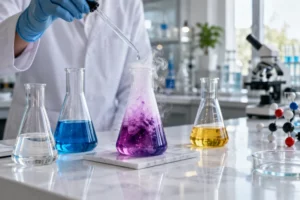
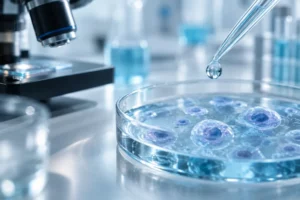
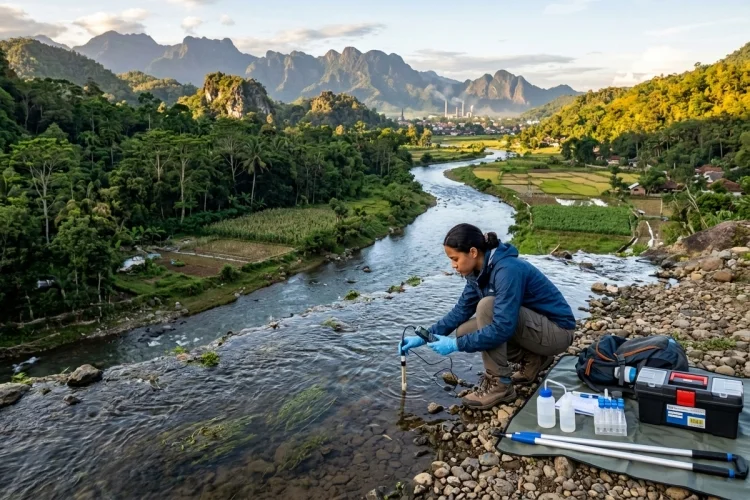
Environmental chemists collect samples of air, rain, drinking water, rivers, groundwater, soil, sediment, plants, or animal tissue. They then use laboratory instruments to identify chemicals and measure their concentrations.
Water testing may include pH, dissolved oxygen, conductivity, nutrients, metals, pesticides, and organic compounds. The USGS National Water Quality Laboratory can analyze hundreds of inorganic and organic contaminants in water, sediment, and fish tissue.
Scientists must also avoid contaminating their own samples. Clean containers, quality-control samples, careful storage, and accurate calibration are essential when measuring tiny concentrations.
Finding a chemical does not automatically mean there is an immediate danger. Researchers compare the measured amount with environmental guidelines, toxicity information, background levels, and expected exposure.
They may also monitor the same location over months or years. Long-term data can reveal whether pollution is increasing, whether regulations are working, or whether a cleanup project is reducing contamination.
Real-World Examples of Environmental Chemistry
Acid rain is a classic example of chemistry connecting air, water, and soil. Sulfur dioxide and nitrogen oxides can react in the atmosphere to form acidic compounds that later return to Earth through rain, snow, fog, or dry particles.
As acidic water moves through soil, it can release aluminum and carry it into streams and lakes. This process can create harmful conditions for fish and other aquatic organisms.
Ocean acidification provides another major example. Atmospheric carbon dioxide dissolves in seawater and participates in reactions that form carbonic acid and reduce ocean pH.
These chemical changes can make it harder for some organisms to build shells and skeletons.
Environmental chemistry is also used to investigate pesticides in groundwater, mercury in fish, nutrient pollution in lakes, fuel leaks beneath service stations, and contaminants released from industrial sites.
In each case, chemistry helps connect a source with its environmental behavior and possible effects.
Environmental Chemistry vs. Green Chemistry
Environmental chemistry and green chemistry are closely related, but they are not identical.
Environmental chemistry studies chemicals after or while they enter natural systems. It examines their sources, movement, transformations, concentrations, and effects.
Green chemistry focuses more on preventing pollution at the design stage. It encourages scientists and engineers to create safer products and processes, reduce hazardous substances, improve efficiency, and minimize waste.
For example, an environmental chemist might study how a solvent contaminates groundwater. A green chemist might design a safer solvent that performs the same industrial task without creating the same environmental risk.
The two fields support each other. Environmental research reveals problems, while green chemistry can help prevent similar problems in the future.
Why Environmental Chemistry Is Important
Environmental decisions require more than knowing that pollution exists. Communities need evidence about where it came from, how serious it is, who may be exposed, and which response is likely to work.
Environmental chemistry supports drinking-water protection, air-quality monitoring, waste management, contaminated-land cleanup, agriculture, public health, and ecosystem conservation.
It also helps governments and industries set limits, evaluate environmental permits, investigate spills, and track whether pollution-control measures are effective.
Environmental chemists may work in laboratories, government agencies, consulting firms, universities, manufacturing companies, or environmental organizations.
The field is becoming increasingly relevant as society deals with persistent pollutants, changing climate conditions, growing cities, expanding chemical production, and the need for cleaner technologies.
Most importantly, environmental chemistry makes invisible processes measurable. It gives us the tools to understand what is in our surroundings and make better decisions about how to protect them.
Environmental chemistry studies the substances and chemical reactions found in air, water, soil, sediments, and living organisms. It explains how natural compounds and pollutants move, change, persist, and interact with ecosystems.
The field helps scientists test water, monitor air pollution, investigate contaminated land, understand ocean acidification, and develop effective cleanup strategies. It also works alongside green chemistry, which aims to prevent pollution through safer chemical design.
Start observing the chemistry of your own environment. Consider where household products, fuel residues, fertilizers, and waste may travel after use.
Then explore local air- or water-quality information to see how environmental chemistry turns everyday observations into evidence that can guide meaningful action.